River Whitecaps, Friends Reunited & a Mountain Trifecta

IMG_3327

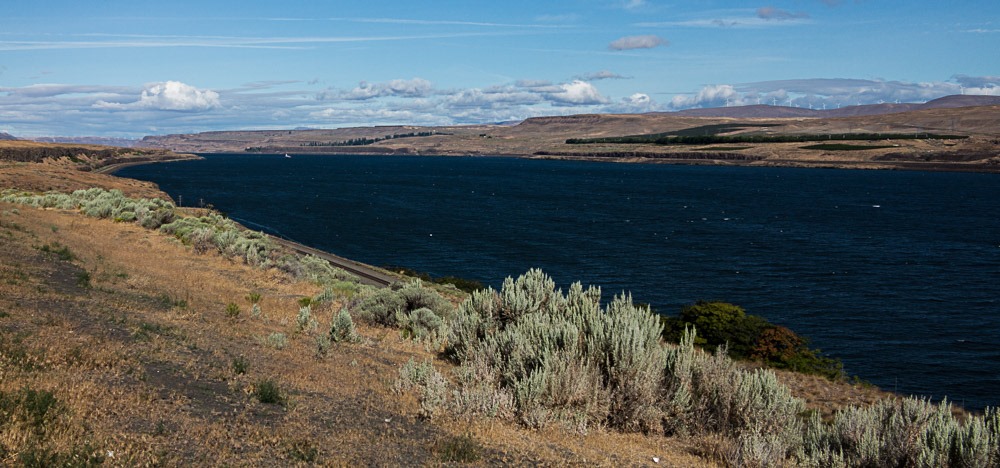
RENTON, WASHINGTON—Freed from the self-imposed constraints of my preparatory daydreams, I’ve relished the the unexpected rewards of vagabondage. No longer eschewing the Interstates, I followed I-84 from Pocatello to Portland. Much of it follows the Columbia River and its gorge that leads into the Cascades. Sunny scenery surrounded me as a 25-knot headwind dragged my mpg into the low 40s. At first I thought the wind, which frosted the river with whitecaps, was the luck of day. And then I noticed that most of the trees I passed had  a distinct eastward lean. Knowing that I was not the only one who’d dealt with the adiabatic buffeting made me feel better.

From a rise that preceded the shallow dip that started the climb into the Cascade Mountains I could see the snow-capped Mount Hood on the horizon. My first sight of the mountain, I stored the image in memory. Climbing higher into the mountains brown gave way to green and the vegetation grew taller. The road started to twist and turn through the trees. Wisps of Celtic clouds wreathed the highlands with dramatic woofs and warps of 64 shades of gray. The road was rain wet, but the air was cool and dry and Ole Blue eagerly leaned left and right as we summited the pass and coasted toward Portland.
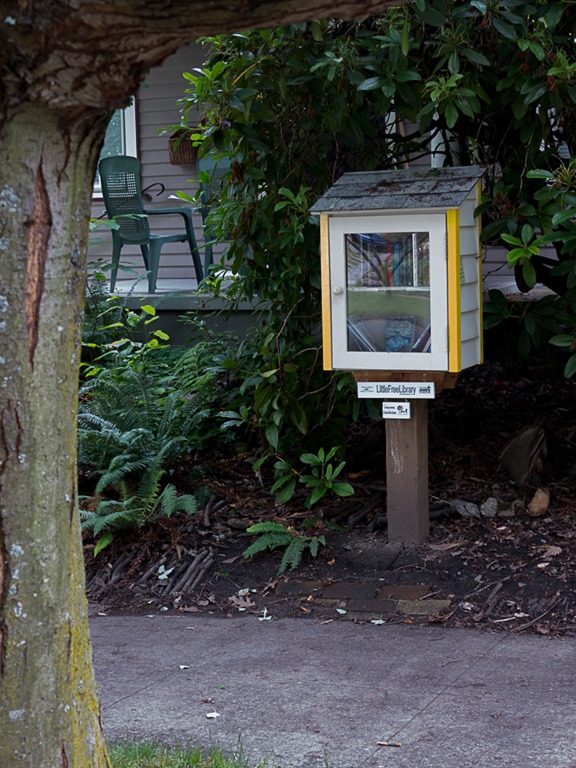
IMG_3342There I reunited with Scott, a childhood friend I’d last seen around Christmas of 1969. We reconnected about a year ago on Facebook, and in our e-mail catching up, he said that if I was every in the neighborhood… Zumo the GPS led me to the front door of his tidy green bungalow. Across the street was a tiny Free Library box on a post, packed with paperback fiction and a few hardbound books. A Prius with a roof mounted bike rack in the driveway verified my destination.

Last year, Scott and his wife, Karla, a retired ICU nurse, pedaled a tandem bike from Portland, Oregon, to Portland, Maine, and I intuited a lot about them from the blog posts that recounted their progress. His core personality, open, outgoing, and adventurous, was unchanged. Despite the intervening decades, we quickly reestablished the bond that united us as kids who built tree houses and underground forts in the woods behind our boyhood home of Streamwood, a post-War suburb planted in the cornfields west of Chicago.

Over a healthy lunch at the Breakside Brewery we caught up on the intervening years. He retired from Intel after more than two decades as a software engineer, an early in life career change that started with a degree in entomology and working for a commercial bee keeper. But we didn’t dwell on his work or mine. About a month in recovery from bypass surgery we set off on a brisk walking tour of the city, starting on the river walk esplanade. Scott pointed out the bridges that crossed the Willamette River, giving the ages and history of each. It was a fascinating perspective on the city, one that I would not have noticed if I’d been trying to find my way without a guide. I filed that revelation in my vagabondage handbook.

IMG_3356A serious wine collector, his selection complimented perfectly our dinner of Copper River salmon grilled on a soaked cedar plank, fresh asparagus, and a salad of grilled potatoes. Two more bottles of red wine fermented from Willamette Valley grapes fueled out conversation that lasted until midnight. We mused on why the city fathers had the sculptor cover the exposed breast of his immense pounded-copper Portlandia on the Portland Building. And we talked of family and friends not long heard from and our curiosity about how their lives had gone since we all were free-range suburban kids.

Sleeping in to miss the Portland rush hour, Blue and I followed I-5 north. Our traffic suffering was rewarded by a mountain trifecta. Having visited Portland and Seattle several times, I’ve only seen Mount Hood and Mount Rainer once each. On this trip these peaks stood proudly snowcapped in a cloudless blue sky. Not to be outdone, Mount Saint Helens, with show adorning its leveled-off peak, stood resolutely between them.

The weather held and I saw Rainer again as it turned down the road toward the home of my riding buddy, Ed, which surprised me. Having traveled the road several times over several years, I would have never guessed that this tree-framed panorama has been hiding behind the clouds. With a day off for laundry and butt recovery, we start east tomorrow and the second half of our vagabondage adventure. Ed takes lead on this leg, so the unknown awaits.
Posted in Food, Motorcycle, Travel | Tagged , , , , | 1 Comment

Along Interstate 84, US 30 Sustains Oregon Small Towns

IMG_3261PENDLETON, OREGON—Along much of its route through Oregon, US Highway 30, is now co-located with (subsumed by) Interstate 84, which runs from Pocatello, Idaho, to Portland, Oregon. Destined for Pendleton, Oregon, the GPS had a simple command this morning: Drive 450 miles on Interstate 84.” Aside from gas, which I needed more than usual because of a 25-knot headwind, I had two planned stops, previously researched on Pubcrawler.com. They had more in common that the brew pubs where I planned to eat lunch and dinner. Through both of them, US 30 departed from I-84 to follow its original route through the heart of town.

Conceived and built in the 1920s, the US Highway system linked the main streets of America. It was the economic circulatory system that sustained the life of towns large and small from one coast to the other. It helped build—and unite—the nation during the formative years of the people we Baby Boomers call mom and dad. When getting places more quickly, and without bothering with places we didn’t need to visit, we conceived the US Highway system’s offspring, the Interstate system. A transcontinental network, it’s defined by “limited access,”meaning you can only get on and off at certain interchanges. You know, the on-and-off-ramps outside of town were Walmart and all the franchise businesses are located.

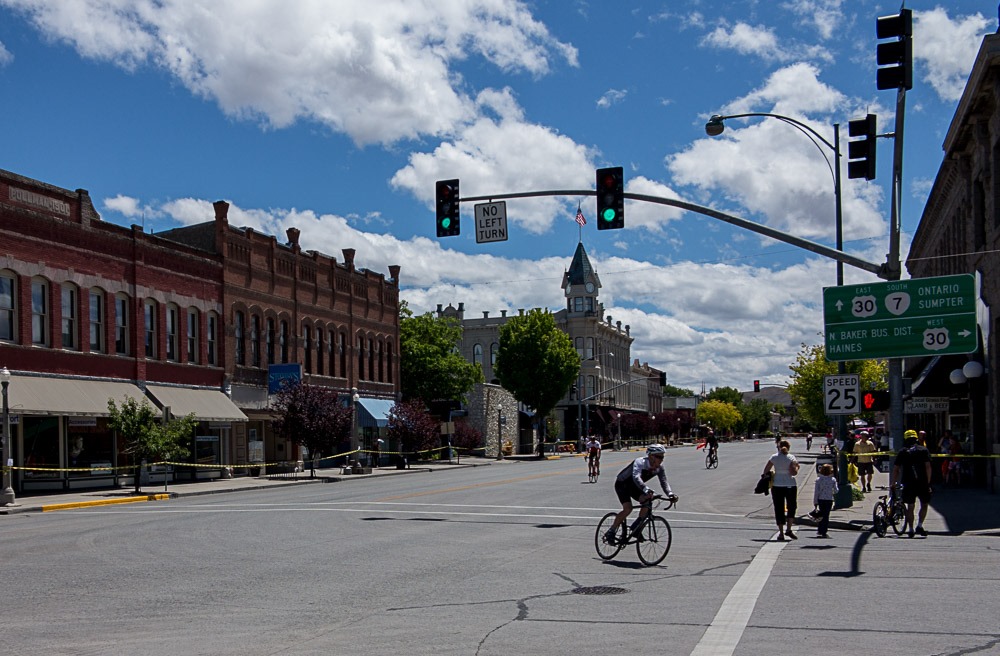
IMG_3252Over time, many of the US Highways have been co-located with interstates. But Oregon is the first I’ve seen where the subsumed highway has kept its primary role as a life-giving business route. And in Oregon, it also happens to follow the Oregon trail, a fact noted in the cities where I ate. Getting to the Bull Ridge Brewpub in Baker City was a challenge because all of the main roads through it were blocked off. Stephen, the barkeep, explained that today was Cycle Oregon, and the racers were due through town at 2 p.m. He couldn’t explain why they closed the streets before noon. The beer was okay, but the blackboard listed three IPAs, a Hefeweizen, and a Schwarzenberg, a black lager. I went with the session IPA at $4.50 a 12-ounce pint and an $11 chicken wrap with clam chowder.

About 98 miles farther west on I-84 is Pendleton, where US 30 again swerves into town. I rolled past the Prodigal Son Brewing Company on Court Ave., the west-bound one-way half of the main drag. Seeing the four picnic tables full of people outside its historic building made a positive impression. But I needed to work up an appetite, so after finding the Rodeway Inn and Suites around the corner from the brewery (making this the perfect overnight so far this trip!) I set out to explore main street, and to find the source of the music that filled the air.

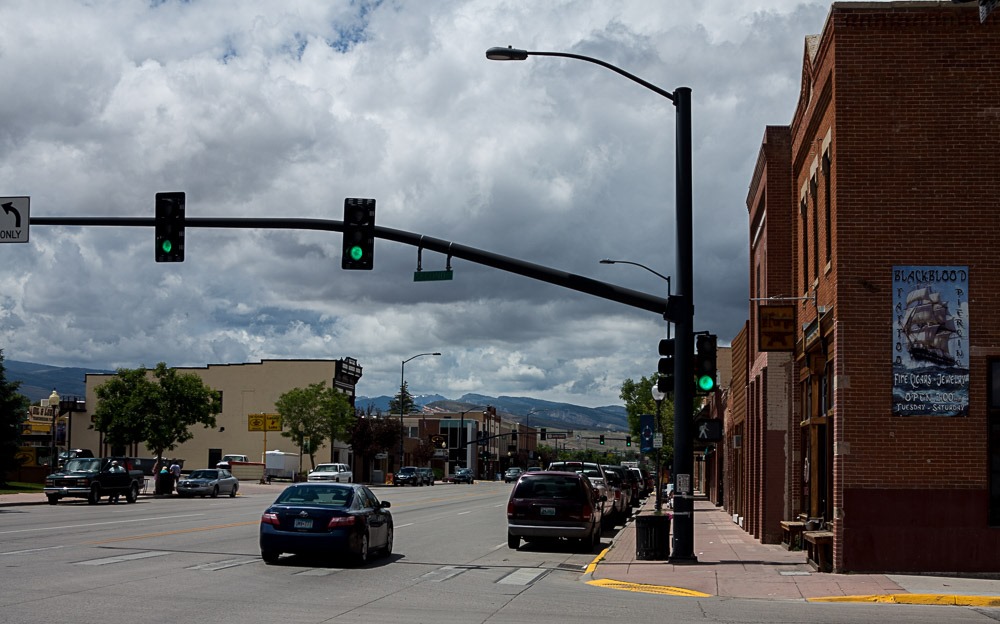
IMG_3282The seat of Umatilla County, named for the river whose shore is one of its river-walk borders, Pendleton is a small town of 16,612 people. One of them is Angel Murillo, a student at the local community college who works at Hamely’s, the world famous cowboy outfitter established in 1883. It was having a big saddle sale. Explaining that Ole Blue already had a saddle, we chatted about the town and what it had to offer. “I’ve only been here a couple of years, and everyone tells me that there’s nothing to do, but I’ve been getting along all right.”

I should hope so. There are shops on the main streets and those connected to it that offer everything from books and music and quilting supplies to the expected banks, beauty salons, and western outfitters. What is unusual is that there are a half dozen or so hotels downtown, including the Rodeway. That might be because of the Pendleton Roundup, a weeklong rodeo extravaganza first held in 1910. In no uncertain terms, said Angel, it is a VERY BIG DEAL.

IMG_3301Seeing signs pointing to museums, something called the underground, and the river walk, I made it to the river and a sign proclaiming Court Ave. as the original path of the Oregon Trail before the music drew me back downtown. It was, indeed, a live performance situated on the front lawn of a cowboy bar. The singer promised the folks, and there were a good number of them, that “they’d find love on Facebook…so stay inside, turn of your teevees, and log on.”

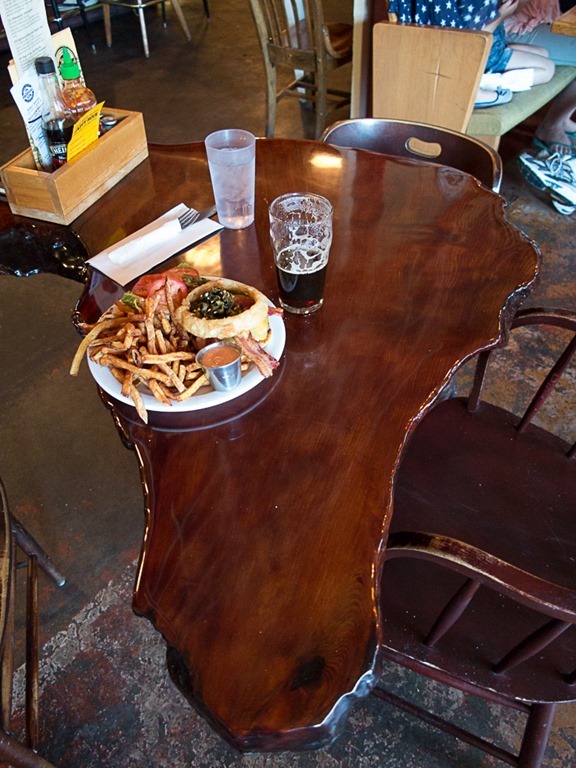
IMG_3323After walking for more than an hour, it was time for dinner. The Prodigal Son’s Bruce’/Lee Porter ($4.50 for an honest, 16-ounce pint) was smooth, with a full creamy body that now ranks in my Top-5 porters. And the High ‘n Rye Pale Ale was robust, with a sharp edge to it that made me want another. But there was no room left. The half-pound Pit Boss burger, with bacon, cheddar cheese, tomato, lettuce, jalapeños, and an onion ring, didn’t leave any room. I was eyeing the chocolate chip cake, chocolate, and marshmallow cream whoopee pie for dessert, but there wasn’t room for that, either. As it is, I won’t need to eat again until dinner time tomorrow in Portland.

Posted in Craft Beer, Food, Lodging, Main Street, Motorcycle, Travel | Tagged , , , , | Leave a comment

Rain Suit Riding & Beer-Based Decision-Making

POCATELLO, IDAHO—Laying the weather map’s bolus of bad weather over the road map devoid of small town dots that connect the larger cities called for a long day in the saddle to compress two days of rainy riding into one. With the weather moving east as I headed west, it just seemed to make sense. And it would be nice to be up one against Mother Nature.

IMG_3235Besides, I have been craving a good beer; that which I imbibed with good friends and my youngest son at the Rock & Run in Liberty, Missouri, has since gone the way of all beer. It’s been the only good beer I’ve relished so far on this trip. All the convenience stores have to offer in a single serving are from St. Louis, and I cannot look forward to another Bud Light with my celebratory end of day cigar.

Only intermittent rain stood between me and the Lander Brewing Company, so that was my lunchtime goal. Investigating this small town was an important goal because I almost moved there in 1982. With my writing and photographic skills, she newspaper there wanted me as its next Lifestyle editor.

The idea of moving to a small town that was, even then, a hub of outdoor activity, appealed to me greatly. Unfortunately, they needed me there before graduation from the University of Missouri School of Journalism, and if I didn’t get my degree, the VA would seek a refund of the meager $311 a month it paid me in GI Bill benefits, so I passed. And I’ve always wondered what I didn’t pursue.

IMG_3241After lunch I wandered the streets in warm sunshine. Many of its 7,677 residents seemed to be young, fit men and women, nearly all of whom offered smiles as I passed. Backpacks and bikes were everywhere. The mountains rose at the far end of main street, which was lined on both sides with businesses with open doors. Yes, I could have been happy here, maybe. What I didn’t see during my peregrination was the box with the newspaper, whose name I can’ remember. The Caspar paper was the sole offering.

Riding out of town, the GPS told me to “Drive on Main Street for 104 miles.” At the edge of town it became WY 28. A dark, ominous sky lay ahead of me. I pulled the collar of my florescent yellow rain suit tight and hunkered down. The rain came in installments that were not serious enough to consider hiding; they were just annoying.

As it has along many of the paths I’ve followed so far, the railroad paralleled the pavement. Every 10 or 20 miles I passed the decaying remains of small agricultural whistle stops. Their main streets, lined with a handful of buildings, invariably met the tracks at a perpendicular crossing. In each there seemed to be two or three two-story brick buildings. At one time they whistle stops’ showpiece structures, there windows were now boarded up and painted the same faded color as the rest of the building. The trains still passed through several times a day, but their cargo was usually coal. The didn’t stop, but they still blew their whistles to warn the surviving residents of their approach.

IMG_3244As rain streamed off my helmet’s face shield, it occurred to me that this consequence of transportation progress has affected many of the small towns I’ve visited so far on this vagabondage adventure. Grand Detour, where John Deere created his plow that replaced prairie grass with corn and beans, was a river town. And so was Nauvoo, which had a deep water port but no traffic. The railroad took it all after the Civil War. And the railroad also put an end to the emigrants’ wagon trains along the Oregon Trail. And after World War II, the U.S. highway system usurped the railroads’ dominance in the freight and passenger markets.

Today these small towns barely survive as thin shadows of their former selves by providing a handful of essential services to the farmers who still work that land that surrounds them. Most of the next generations usually leave to make their way in the world. Those that remain economically viable are either close to a bigger city, to which they become a bedroom community, or they are so far from anywhere that they become, like Lander, the “big” town that supports those who live in its environs.

Posted in Food, Main Street, Motorcycle, Travel | Tagged , , | Leave a comment

Weathering the Storm, Literally and Metaphorically

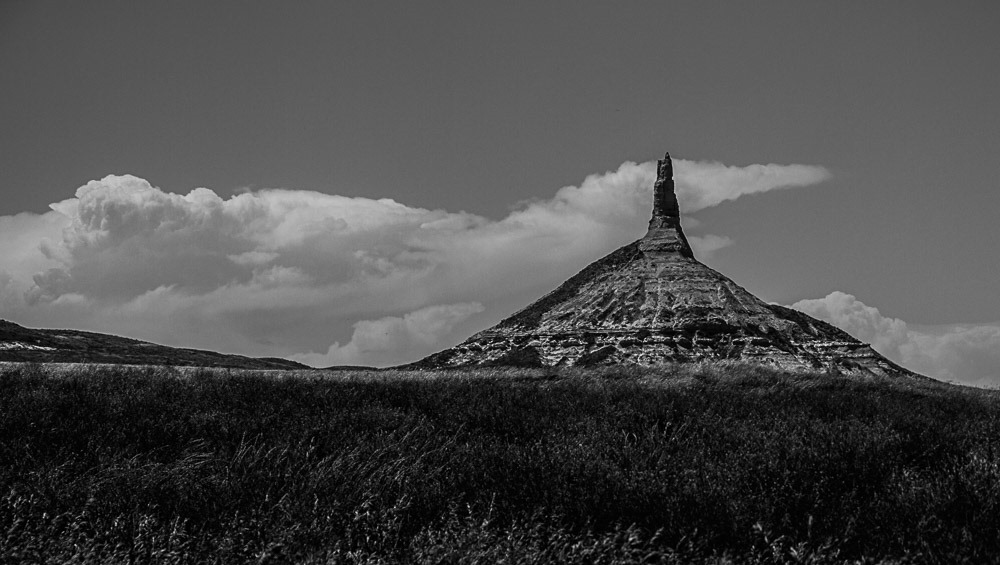
IMG_3206GERING, NEBRASKA—While forking a ham and cheese omelet with hash browns into my face for dinner tonight, the grating National Weather Service klaxon that announces severe weather echoed in the kitchen of Sheryl’s Log Cabin. I couldn’t hear what the warning was about, but the ladies out front were making fun of the weather geek in the kitchen. Given the weather that’s plagued Nebraska for the past several weeks—and the expiring thunderstorms I’d seem behind Chimney Rock—she had every right to be concerned. Walking across the street to my room at the Monument Inn & Suites, the sky over the Scotts Bluff National Monument was a burgeoning mass of gray and darker gray clouds. Calling up NexRad on the Weather Underground, the bigger storm seems to be going north, but there’s a smaller cell with a red heart to the southwest, and it’s headed our way. If Mother Nature has any feelings for me, the storm will blow through, without causing any damage, while I sleep.

When I left Grand Island this morning a similar looking western sky awaited me. Certain I would be getting wet, I packed my rain suit for easy retrieval. Fortunately, I didn’t need it. The storm stayed south, and my route on US 30 and US 26 kept me to the north. I wasn’t so lucky when I rolled into Kansas City the day before. Mother Nature timed the arrival on the only small rain curtain ahead of me to arrive just before I turned off US 152 for the short run to my friend’s house. I accepted the unlucky consequences of bad timing, thankful that I hadn’t spent any more time at the National Frontier Trails Museum in Independence. It was there that I weathered my metaphysical storm.

After a good run along the Great River Road south of Nauvoo, and a satisfying visit at Missouri Military Academy in Mexico, Missouri, where I spent seven formative years of my creative career, the reality of my vagabondage adventure was starting to approach the months I spend daydreaming about it. Like an unstable atmosphere that leads to storms, my positive day turned gray at the museum because it didn’t equal my expectations because it didn’t teach me anything new about the Santa Fe and Oregon Trails. But it was a worthwhile visit because of the epiphany that came from it.

At the museum’s literature rack I was collecting a set of five thick illustrated guides for the road-route that follows the Oregon Trail. As I reached for the fourth I suddenly wondered what I was doing. What kind of adventure would I have with my eyes glued to these guides? It would be little different that people who visit amazing places and see nothing but their smart phones, and behold new sights not as first-person panoramas but as pixels on an liquid crystal index card. I returned the guides to the rack and reaffirmed my dedication to the vagabond’s creed of heading in a general direction and turning off to explore anything that looked interesting.

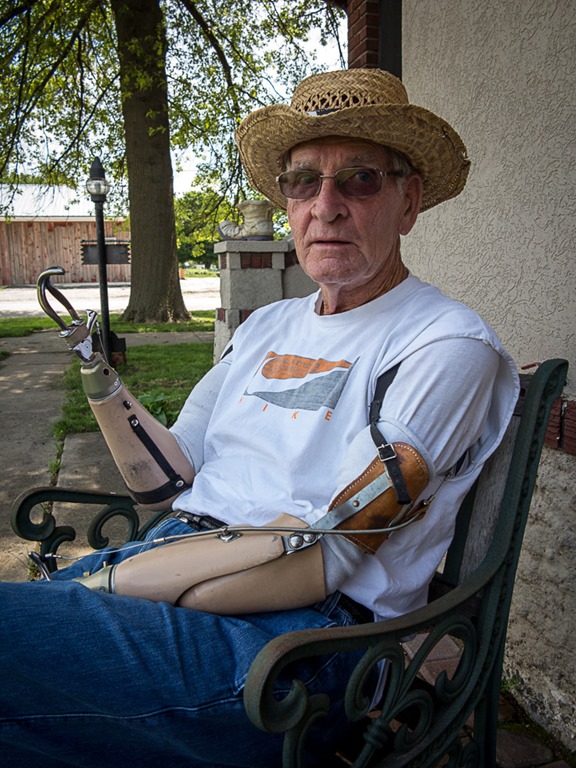
IMG_3111That paid off with Powerball proportions just several hours after leaving Kansas City. Parking on the main street of Burlington Junction, Missouri, I wandered the town were my grandfather lived as a boy, the son of a homesteader who died there in 1903, when a tornado flattened the Masonic Lodge in which he and six others had taken shelter. Turning back toward Main Street I saw an older gentleman sitting on a bench outside his home and said hello. He responded with a question, “Would you put my socks on for me?”

In 2001, Lloyd Pitts lost both his arms below the elbow when the career lineman accidentally became part of a circuit that carried 77,000 volts. Stabbing the air with one of his prosthetic hoods for emphasis, he said, “I should be dead, so all things considered I’m lucky.” After explaining that his wife was out for a walk, and that he had to go cut the neighbor’s grass, he offered me a dollar for my assistance. Instead I asked for a photo and some time to sit and talk.

Born on a farm outside of town in 1940, Lloyd had lived here all his life. Asking if I was related to some Spanglers in the area, I explained about my great grandfather’s tornadic passing, and I asked if he knew were the Masonic Lodge might have stood. Like the lady I talked to in city hall, he didn’t have a clue, and he was unaware of the tornado that swept through the town that is now home to 537 people. I didn’t meet all of them, but those I talked to were consistently friendly. In parting he recommended the Kiss My Grits Café for lunch, and he didn’t steer me wrong. No one there knew anything about the tornado or Masonic Lodge either. Heading west out of town I decided that if great grandpa hadn’t met his untimely end, I might have grown up in Burlington Junction as well, and I would have been happy with that.

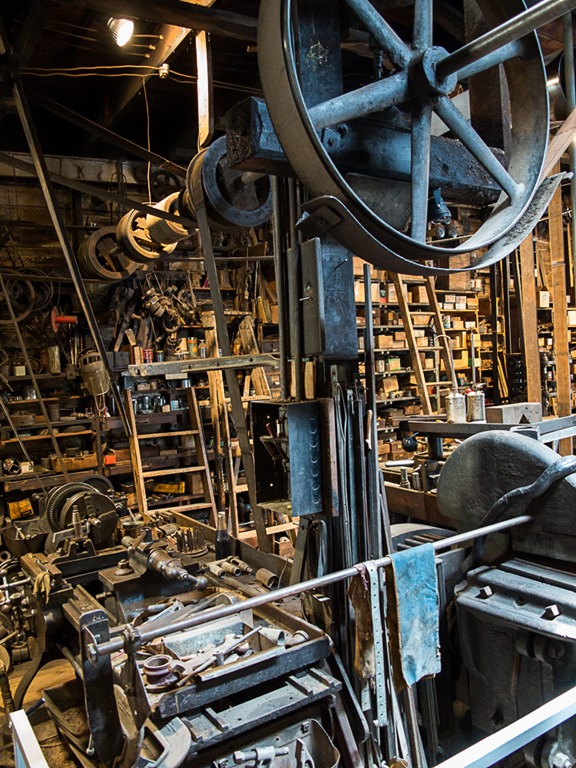
IMG_3129To reach Palmyra, Nebraska, where my grandfather Spangler was born in a homesteader’s sod house in 1899, I passed through Nebraska City. On the main drag, next to city hall, was an Eli Wind Mill. Across the street was the Kregel Windmill Factory Museum. It stopped making windmills in 1941 because World War II consumed the metal it needed, but it survived until 1991 doing repairs and making spare parts. All of the equipment, much of it from the late 1800 and early 1900s still works,  “but OSHA knows about it, so we don’t do any work here,” said Dean, the museum’s jack of all trades, pointing to the buffalo-hide belts that drive all of the machinery. My one-on-one visit with him lasted more than two hours, an unprecedented value for the $5 admission fee.

If I followed my daydreamed route, the Homestead National Monument in Beatrice, pronounced, I learned be-AH-trice, Nebraska. But it was late, so it would closed when I got there. For some time I debated on going the following morning and making up the time with longer riding days, and the knotted muscle in my back started burning hotter. And I remembered my vagabond promise at Independence, so I freed myself from the months of daydream preparations and expectations and ultimately forgot about the 400-mile dogleg to the south and pointed Ole Blue’s front wheel west.

The GPS suggested Interstate 80, and I didn’t argue. It was actually a fitting choice because I traveled the pavement in the opposite direction on my first cross-country bike trip 40 years ago, and I spent one night in August 1974 just outside of Grand Island. This time, however, it wasn’t raining. And it’s not raining here, at least not yet. And tomorrow is another day of heading west with my head up and eyes open.

Posted in Lodging, Main Street, Motorcycle, Museum, Travel | Tagged , , , | Leave a comment

Travel Challenges: Leaving Home & Finding One’s Way

IMG_3031NAUVOO, ILLINOIS—Given the chronic religious persecution that drove the Latter Day Saints from their homes here on the bluffs overlooking the Mississippi River, I shouldn’t really complain about my day. The challenges of my day are evanescent giggles compared to the hardships the Mormons endured as they ultimately found their way to Salt Lake City, helping pioneer the route that would become the Oregon Trail. But they certainly would have understood my frustrations, once they got over the wonder of the technology that caused them.

With my bike packed and ready for the road, my 0538 wakeup call was my wife’s resonant call from the basement, where she’d gone to clean the kitty litter. “Scott! There’s water in t*:30.”he basement!” This has been an ongoing problem that included a new sump pump and running an extension cord to power it. Its dedicated circuit was dead and I could not ferret out why. I replaced the socket and checked the circuit breaker. Still no power. This morning the circuit powering the extension cord died, as the the freezer that was also on line. Resetting the GCI button was a game of whack-a-mole.

Finding an electrician in the Yellow Pages, I woke up Aaron Masters at 0615, after I’d run extension cords from different upstairs circuits to the sump pump and freezer. Then I attacked the water with the Shop Vac and waited patiently for Aaron to arrive “around 8″:30.” He solved the problem in about 10 minutes. The sump pump circuit runs through the generator panel that came with the house, and has it’s set of breakers. The GCI checked out okay, and it worked as it should when the freezer and sump pump overwhelmed it while dealing with last night’s rain.

Getting on the road at 0945 punched Nauvoo into my new Garmin Zumo 390 GPS. I expected it to automatically follow the elegantly crafted route I’d created in the Garmin Basecamp software and downloaded to the GPS. It was the 369-mile scenic route to the John Deere Historic Site in Grand Detour, Illinois, on the Rock River, and then along the Great River Road to Nauvoo. 

IMG_3033No matter what I tried, it kept routing me on the Interstates and toll roads that I wanted to avoid. I surrendered to it and finally arrived at the Deere homestead, anxious to see the blacksmith. Mounting up at Subway after lunch, a kind women asked where I was going. Having taken her grandkids there the previous weekend, she didn’t tell me the site is closed on Monday and Tuesdays. The gate in the white picket fence that surrounded the immaculate white clapboard structures on the well manicured green lawns was locked.

I arrived in Nauvoo at 1743, just as the GPS said I would as it lead me down Interstate 88 to Interstate 80 East, to Interstate 74, before dumping me on the US and state highways that brought me here. There was a short stretch on the Great River Road, tree lined and twisty, a tease to all the great riding the GPS has kept me from. I could have turned it off and resorted to old-school maps, the I’d been riding under clotted gray clouds all day, and they were starting to spit at me. And my frustration was holding a convocation in a burning balled up muscle under my left clavicle. I was ready to call it a day.

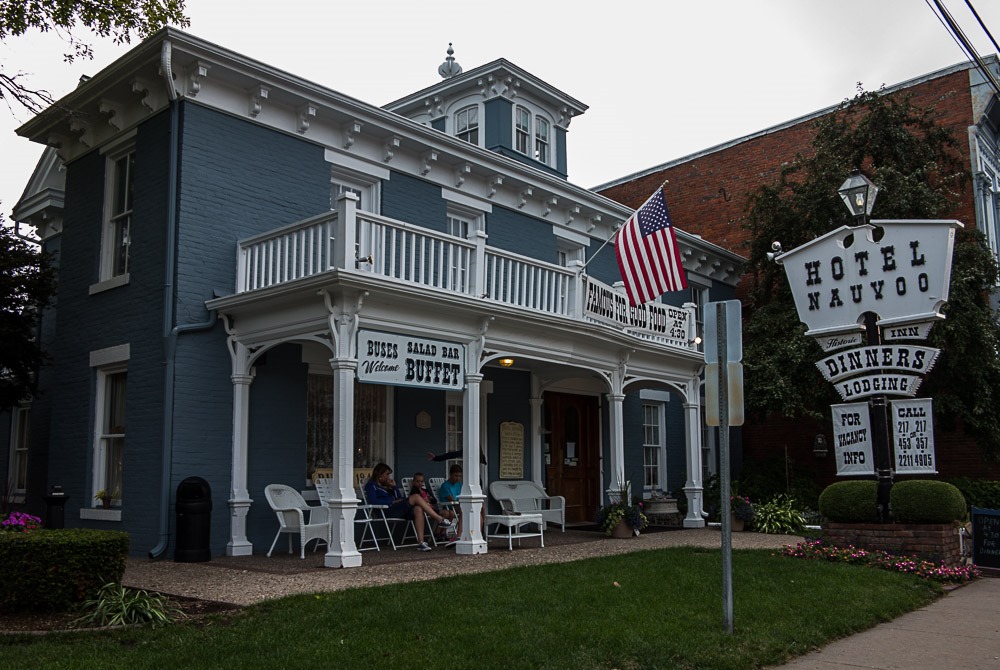
IMG_3041Finding a room at the Hotel Nauvoo, and feasting on its excellent buffet, was a much needed emotional and physical antidote for the day. It even provided picnic tables by the parking lot, where I could savor my cigar and settle for a Bud Light tall boy as I pound these words into my writing machine that, so far, hasn’t given me any problems. The long walk up and down both sides of historic Mulholland Street worked the kinks after dinner.

The locals may have driven the Mormons out of town back in they 1840s, but they cater to them now with main street hotels and vacation rentals, the Zion Mercantile gift shop and several LDS bookstores. Religion is big here. On the bluff at the west end of Mulholland Street, which overlooks the Mississippi, are three churches. The Mormon Temple dominates. To the south is a Lutheran Church, and to the north is Saints Peter & Paul Catholic Church, and the academy school that I first visited about 30 years ago as a chaperone for the Missouri Military Academy cadets that road-tripped here for a dance.

Tomorrow I’ll be stopping at old MMA on my way west. Maybe I’ll figure out my GPS, too. But just in case, I’m digging out my maps. More adventure awaits; the only question is whether it will be good or challenging.

Posted in Food, Lodging, Main Street, Motorcycle, Travel | Tagged , , | Leave a comment

Vagabond Pilgrimage

Forreston-011“What brings you to our small town?”

This question tells me that I’ve reached my desired destination. My short answer is quick and easy: I like visiting places people don’t normally go without a good reason.

“Why?”

The answer to this logical follow-up question has been evolving for years. My travels are a vagabond pilgrimage that teach me more about life because I venture beyond the distracted sphere of my quotidian existence. They have a general direction but no intent beyond serendipity.

Walking from France to Spain, in Off the Road Jack Hitt defined a pilgrimage as a marked route with a known destination. Destined for the Santiago del Compostela, he said pilgrims must find their surprises elsewhere.

Perhaps that is true along a still traveled route, where the way stations that it cater to the pilgrims who follow it. But what if the thoroughfare, like the Oregon Trail or the Illinois Central Railroad’s right-of-way, which plowed and planted whistle-stop towns in an ocean of grass, no longer serves its original purpose? What surprises await in these lonely places rarely visited by those not related to its residents?

Baseball is not a pastime that captures my attention, except when my sons were playing. And then one afternoon several years ago, unrelated to any player on the diamond, I found a spot in the bleachers at Little League game in Forreston, Illinois, a village of 1,446 good people.

It was filled with mothers and fathers and a few grandparents. Those not yet old enough to play on the field cavorted beneath the stands and scurried across the grass in free-range packs playing. The adults acknowledged my presence with a nod and smile before returning to their conversations that filled the time between their son’s at bats and fielding efforts when the ball flew their way.

Watching them I realized that Little League and my sons’ soccer matches were more than games that filled countless weekends. It was then that I realized that they established and sustained the community I longed for by uniting people who didn’t normally see each other in any other context, unless their sons were in Boy Scouts. This surprising realization instantly made my memories more meaningful.

This surprise has been one of the many rewards of my vagabond travels. Discovering them, however, takes discipline and courage. Dedicated vagabonds control the urge to make miles, a serious Interstate affliction. And when stopping at some alluring, lonely place, they squelch the natural trepidation of an outsider and take a seat in the stands.

Referencing Wordsworth, Pico Iyer said in Falling Off the Map that “every traveler seeks out places that every traveler has missed,” yet they don’t consider lonely places because they “don’t fit.” Perhaps these places don’t “fit” because people are uncomfortable outside of the homogenous world in which they live.

On my vagabond pilgrimages I seek out places that most travelers ignore because they possess no scheduled, predictable life-changing “experience.” Surprise, unexpected discoveries made at prosaic events like a Little League baseball game can also be life changing, and letting them happen naturally is a fulfilling investment of time to travel in search of them.

Posted in Travel | Tagged , , , | Leave a comment

Plymouth’s Marvelous Mill Street

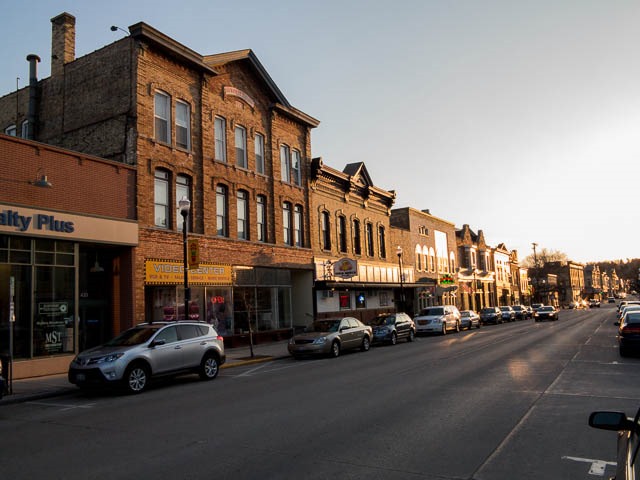
Plymouth-13PLYMOUTH, WISCONSIN—What other word describes a small town main thoroughfare lined with active storefront businesses including not one, but two bookstores, and a craft brewery.

Yes, there were a empty storefronts for rent, and one building, built by Wm. Laack in the late 1800s, was awaiting restoration. But unlike many of the small town main streets I’ve explored, these vacancies were the exceptions, not the contiguous rule on both sides of the street. It was no surprise that there wasn’t a national franchise among the welcoming businesses that reflected the personality of their owners, not some corporate marketing plan.

Plymouth-7Maggie’s Closet displayed prom dresses in its window. Inside, push-pinned to the wall above a rack of necklaces was a diagram showing which styles complimented the necklines of different tops and blouses. The wall, which does not reach to the pressed tin ceiling, divides what was a JC Penney store in half. On the other side is Red Rooster, which seems to be shared by a number of antique dealers. At one of the booths my wife found a stoneware vase that was both attractive to her, and heavy enough that the cats wouldn’t knock it over when they feasted on the fresh flowers it would serve them. Equally inviting are the murals that decorate the exteriors of 21 buildings in town, most of them on Mill Street. Capturing Plymouth’s rich business history, 160 artists from around the world created them in four days in June 2011.

Plymouth-8At Book Heads, the owner made a proud point that hers was an independent book store. She’s been in business for more than a decade. She carries current titles, and if a customers can’t find what they are looking for, Book Head will order it and have it in their hands in a day or two. As I browsed the shelves my wife and the owner started talking about several authors they both enjoy reading. After sharing news of Sue Monk Kidd’s forthcoming title, they discussed the merits of the two books that preceded it. The first was better than the second, but the initial reviews on the third were promising.

Plymouth-9Down the street, past the Plymouth Brewing Company, was Dear Old Books of Plymouth, which carries a wide variety of used books with a tantalizing collection of rare and out-of-print titles. When I entered, the clerk, a woman in her late teens wrapped in a cardigan against the rainy day’s chill, was reading Ron Power’s biography of Mark Twain. She found it fascinating because the author told the story of Twains life rather than “listing all the facts and dates” like a PowerPoint presentation. I was happy to find a paperback copy of David McCullough’s The Great Bridge (for $6.50) and a selection of Montaigne’s essays. Having never before read his work, I was sold by the first sentence of the first essay, That the Relish of Good and Evil Depends in a Great Measure Upon the Opinion We Have of Them: “Men (says an ancient Greek sentence) are tormented with the opinions they have of things and not by the thing themselves.” The price? $1.

Plymouth-31The Plymouth Brewing Company is a nano-brewery that opened a year ago. As many craft breweries do, it started several years previously when the brew master’s wife got him a home brewing kit for Christmas. What was amazing that his compact brewery creates one barrel at a time, and he manages to keep five different brews on tap at the same time, followed by a half-dozen taps from other Wisconsin craft brewers. He has plenty of time to brew because the tap room is open Thursday from 5 to 10 p.m. and Friday and Saturday from 5 to 11 p.m. That seems to be perfect balance of time, and the slogan on the back of the t-shirt my wife bought me says his beer is “Unfiltered. Unpasteurized. Unsucky.” I couldn’t agree more, and his coffee stout, milk stout, and not-so-pale ale were all worth another trip to Plymouth.

Posted in Craft Beer, Main Street | Tagged , , , , , | 2 Comments

Rising Out of the Minnesota Prairie, a Five-Dome School

Grand Meadow, Minnesota

GRAND MEADOW, MINNESOTA—Riding out of the wrinkled Mississippi River watershed we rolled west into the Minnesota prairie on State Road 16. More than a century ago, agricultural Mondrians had plowed a vast ocean of grass into geometric segments of corn and soy beans.

Small towns appeared on the horizon with whistle-stop predictability: Rushford, Lanesboro, Preston, and Spring Valley. Some were bigger than others, but in passing through each of them fields of beans and corn gave way to houses, which led to a main street lined with brick and board boxes. Some were home to businesses with commercial hearts still beating. Others were orphans hoping for a better future.

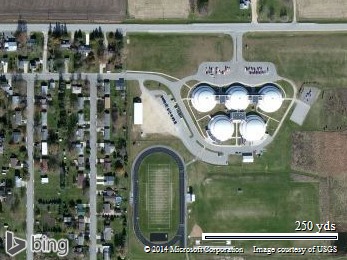
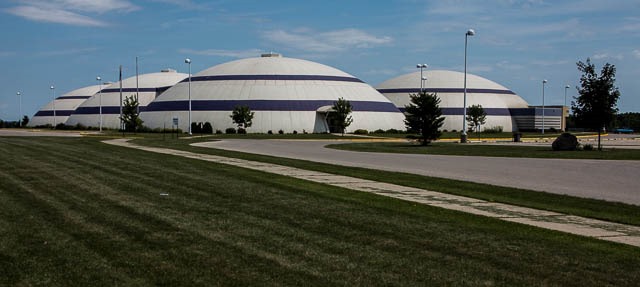
Like a prairie tout setting up a mark with predictable wins, these small towns set me for a surprise in Grand Meadow. On the farm field shoreline rose five white domes, like huge ping pong balls buried in the backyards of the houses at the edge of town.  There was a sign out front, but opposite traveling traffic blocked my readable view. As we refueled in town, Ed mentioned alien space craft; I guessed school.

Bike-10Riding back to the domes proved this true. Many small towns put grades K through 12 under one roof, but five domes? What was it about Grand Meadow’s 1,139 residents that led them to this futuristic educational edifice? There were some cars in the parking lot on this warm August 1, 2014, but no one responded when I circled the domes, rattling locked doors, hoping to find someone with answers. No Joy. And the attendant at the convenience store, where I reunited with Ed to continue our journey, could only confirm what I already knew. That’s where she went to school.

Being unusual, Grand Meadow’s monolithic domes are well documented on the Internet. The need seems clear: the previous school, a three-story structure, needed a roof and better handicap accessibility. As it was built in 1916, there was little a remodel could do to lower its utility bill. An unnamed resident urged the school board to look at concrete monolithic domes, which are energy and space efficient and impervious to tornados (they are the community’s disaster shelter).

Residents were at first skeptical, but support grew with their understanding. They passed an $8 million bond issue in 1998, and the state doubled its innovation grant to $3 million. They broke ground in 2001 and 400 students and 30 teachers moved into the windowless domes the following year. With its geothermal energy system, the district’s monthly utility bill is a fifth of the bill for the old school.

Bike-9

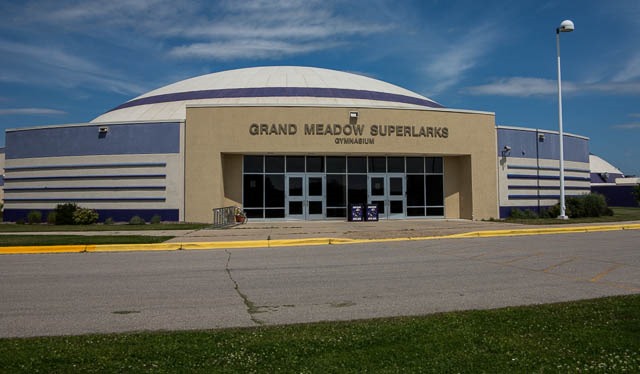
The domes cover 81,000 square feet. Alphabetically identified, A is the junior and high school, B is the admin  office and media center, C is home to pre-K to 6th grade, D is the gym and related training and locker rooms, and E is home to the band and art rooms, and the cafeteria.

What a difference a decade makes. My news search for reports of the resident’s attitude on its domed school also turned up a February 5, 2014 article in the Austin Daily Herald, “More Space at the Dome?” As is happening everywhere small towns are commuteably close to cities, Grand Meadow, 25 miles south of Rochester, is becoming a bedroom community.

That means the K-12 student population could hit 450 or more in two years, said the article, and there would be no room at the domes. To prepare, the district is seeking a $13.7 million referendum for an additional 71,200 square feet. A committee looked at more domes, but the district decided on “traditional buildings in order to maximize useable space.” They will be energy efficient thanks to the geothermal energy system.

While the community’s taste in architecture has changed, its community spirit seems robust. If the addition comes to pass, it will include a “physical education complex containing a full-sized indoor court, walking/running track, aerobic and weight rooms, and more. District officials say there are plans to open the physical education complex to the community. The indoor court and other areas would only be used by students during the school day, but community members could use the facility for a nominal fee at other times if the referendum passes.”

Posted in Motorcycle, School, Travel | Tagged , , , | Leave a comment

Travel’s Last Leg, as Eagerly Anticipated as the First

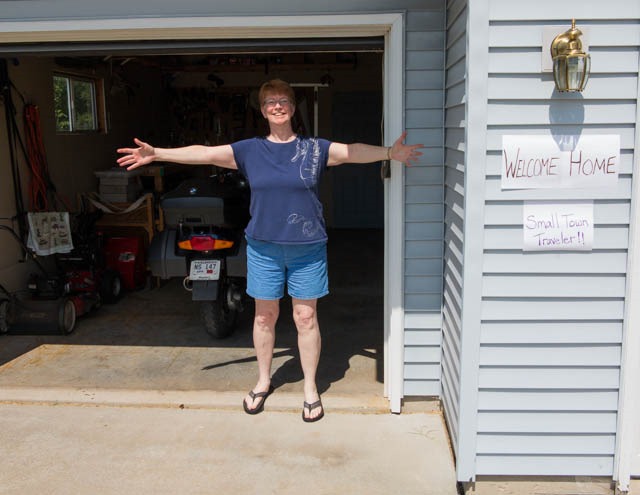
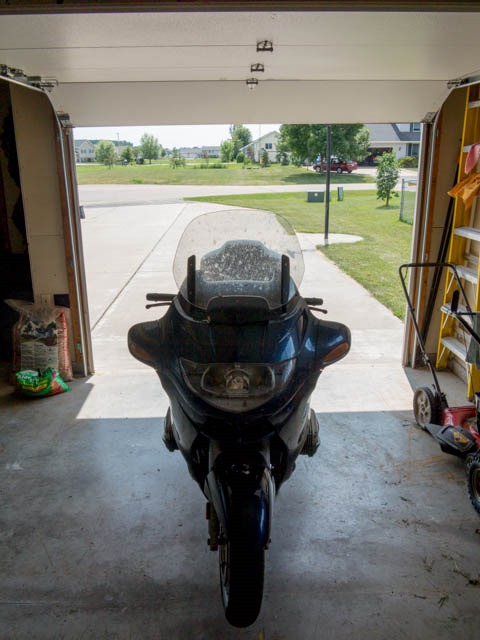
Bike-529OMRO, WISCONSIN—In my decades of travel, on trips far and near, long and short, I’ve always anticipated the last leg home with the same eagerness of their first leg. This two-wheeled adventure to Seattle and back (and neither Ed nor I have come up with a good name for it after nearly two weeks of trying) for two reasons. At 5,341 miles and 16 days, it’s been my longest in mileage and days away from home. The second, but of greater importance is that my red-haired sweetie who’s dedicated 18 years to me was sitting on the front porch, rocking, awaiting return. Next to the garage door where Ole Blue lives when he’s not on the road she’d taped a sign: “Welcome Home Small Town Traveler.”

It’s been an excellent trip for many reasons, but it’s good to be home.

One reason for the trip was to launch Small Town Traveler. It’s an experiment in professional development. Most of the writing I do involves a lot of research and revisions to manuscripts I produce to meet the needs of others. This is writing for my needs, and for others who happen to trip across it. This post, and the ones that precede it, are first-draft impressions organized and spewed into the computer after a day in the saddle. The experiment was, after a day in the saddle, summoning the energy and willpower to organize thoughts and observations into coherent story? Thanks to Ed, my two-wheel lead on the way to Seattle who cut my daily mileage in half to 300 miles, give or take, the answer is clearly affirmative. He’ll likely be happy to know that I maintained the standard all the way home, except for one 400-mile day, but that extension was motivated by available lodging.

Speaking of which, my consistent complaint of the trip was that motels all seem to have the same shower head elevation—short—perfect for getting my shoulder wet. But I shouldn’t complain. On my first cross-county motorcycle trip in 1974, on Interstate 80 from NAS Alameda to my parents’ home in Streamwood, Illinois, I spent one night at the Purple Sage Lodge in Rawlings, Wyoming, because the Best Western across the street didn’t have a room. A 1940s-era travel court, the shower was a sheet metal box and the shower head, fully elevated, reached my waist. I made quite a mess getting my top half clean. It involved a lot of anguished, angry towel wringing.

There is no comparing that trip to this one. Much has changed in the past 40 years. Then I rarely saw another motorcycle on the road between cities, other than the “old guy” who was probably younger than I am now. He was on a BMW R750 with a quarter-million miles on the odometer. We met in Nebraska. I was off to the side of the road, oiling the chain on my trusty Honda 750, Pegasus. Yeah, I know, I have a thing about naming my bikes. Oddly, this doesn’t transfer to my other forms of transportation. He stopped to see if I was okay, which I was. We talked bikes for awhile, and that’s when I decided to one day have a shaft-drive Beemer.

People are friendlier now. Then strangers rarely initiated a conversation or continued one when I tried to exchange words with them at gas stations, restaurants, motels, and looking at the map at rest stops or historical points of interest. On this trip rarely did I not have a conversation with someone at these locations, as well as unexpected venues. At a North Dakota fuel stop outside of Williston, at the next urinal a construction worker from Oklahoma who was the road paving crew saw my armored jacket and asked what I was riding. He concluded our short conversation by apologizing for the construction delay and urging me to to keep in eye open for workers and dodgy pavement. 

Bike-527Two encounters were especially heartwarming: The first was the man who, seeing Blue parked outside the Dancing Beagle in Rudyard, Montana, came in expressly to find out why a two-wheel Wisconsin license plate was in their small town. The second was Rob, the BMW R1200RT rider from Vancouver, BC. We were preparing for our departures, and he was a bit ahead of me. Dressed in his fluorescent neon green riding jacket and helmet, he walked over to shake my hand, say how good it was to meet me, and to wish me a safe journey. I wished him the same. I really should have taken his picture and gotten his e-mail address, as I should have with others I met over the past several weeks. I’ll be better in the future.

Speaking of helmets, if someone is looking for a research project worthy of an Ig Noble Prize, studying the affect of a full-face brain bucket on old guy nose hair growth would certainly be running. I hit the road with a nasal crew cut and returned with a budding mustache that tickled as the slight breeze behind my faces shield made the hairs dance like sea grass in a ebbing tide. Such are the thoughts that fill my head while locked in polycarbonate solitary confinement. Other pastimes are determining the source of strange sounds and smells. The slipstream whistling past my helmet is responsible for the former, and the source of diesel fumes, the eau de Williston, and manure being spread by a farmer are clearly seen…but microwave popcorn?

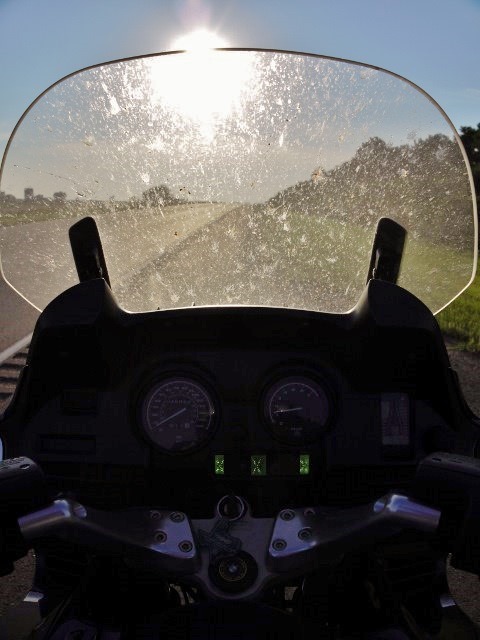
One goal unaccomplished on this trip was transcribing my scribbled notes into the computer after writing the first draft of the day’s events. That will have to wait until I get caught up from my absence (and scrub more than 5,000 miles of bugs from Ole Blue’s face), and that will surely motivate me to revisit my first drafts here and revise them to include anecdotes and observations and thoughts that didn’t bubble to the surface when I was first writing. I’m looking forward to that. But now it’s getting late. I’ll add the photos tomorrow. Right now I need to find that nose hair trimmer the lovely red haired woman downstairs got me for Christmas two years ago.

Posted in Motorcycle, Travel, Uncategorized | Tagged , , | Leave a comment

Heading East for Home but Waylaid by Lindbergh’s VW Beetle

bugs (480x640)LITTLE FALLS, MINNESOTA—Heading home after two weeks on the road, crossing into my home time zone yesterday at the border of North Dakota and Minnesota infected me with get-home-itis. Starting every day by riding into the rising sun as it paints familiar terrain covered with beans and corn in a welcoming, warm yellow light only makes it worse, even when traveling a new route, US 10. Along the way I passed several signs that would have been worth a quick detour a week before, but now rarely rated a second glance.

Until I passed the sign for the Lindbergh Boyhood Home, a Minnesota Historical Site in Little Falls, on the banks of the Mississippi River. Having read Lindbergh’s Autobiography of Values as well as several biographies, including Scott Berg’s excellent Lindbergh, I understood and appreciated the importance of this boyhood home in the formation of his stolid character. More than 90 percent of the artifacts in the home belonged to it when Lindbergh and his mother lived there, and he helped stage it before his death in 1974. The Minnesota Historical Society has done an excellent job, the staff are developing Lindbergh scholars, and I recommend a visit regardless on your interest in aviation.

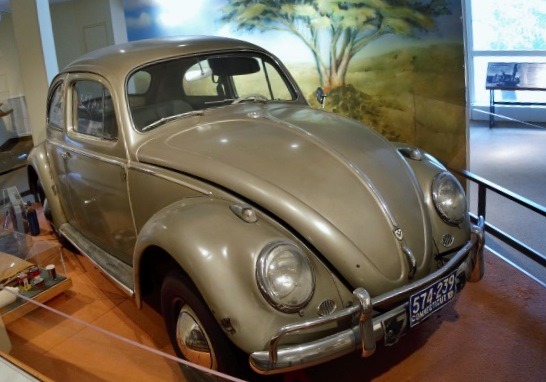
vw (640x480)The most interesting artifact that taught me something new about the man was his 1959 Volkswagen Beetle. I knew a bit about the car, thanks to a story about it that was either written by or quoted his daughter Reeve. Lindbergh drove is across the United States several times, sleeping in the Bug, using his shoes as a pillow. His shoes weren’t part of the display, but the things he left in the car, a took kit, owners manual, trenching shovel, canteen, air mattress, a can of soup, a spoon, and two tins of Brunswick sardines. That in itself struck a chord in me because frugal travel is part of my nature. But that’s the end of a story that I learned during a fulfilling three hour visit that was a needed antidote for my get-home-itis.

Lindbergh bought the car in 1959 in Paris, and drove it around Europe and the Middle East. Then he shipped it home and it was the Lindbergh family car at the Connecticut home. It was from there that he ranged out across the nation. He’d driven to boyhood home when he was called away from his trip, so he left the car in the garage they’d built for the 1916 Saxon six, which he drove to California that same year with his mother and uncle, when he was just 14 years old. It took them more than a month, and they didn’t return until the following spring. For perspective, this was three years before the US Amy made the first cross-county road trip that took nearly 90 days, and helped build support for the Lincoln Highway.

fiesta (640x480)Eisenhower was a member of the military mission, which I’m learning about in the just started book, The American Road. This road trip contributed the his support and push for the US Interstate system that bears his name. Being so late in the day, I decided not to get back on the road, and I found a Super 8 at the edge of town, by US 10. Next door was Little Fiesta, a excellent Mexican restaurant. The Burrito Vallarta was excellent! And so my dessert, a Flat Land Brewing Company Northwest Passage IPA I found at the liquor store across the street. Tomorrow is another day, and I’ll make it home then.

Posted in Craft Beer, Food, Lodging, Motorcycle, Museum, Travel | Tagged , , , , | 1 Comment